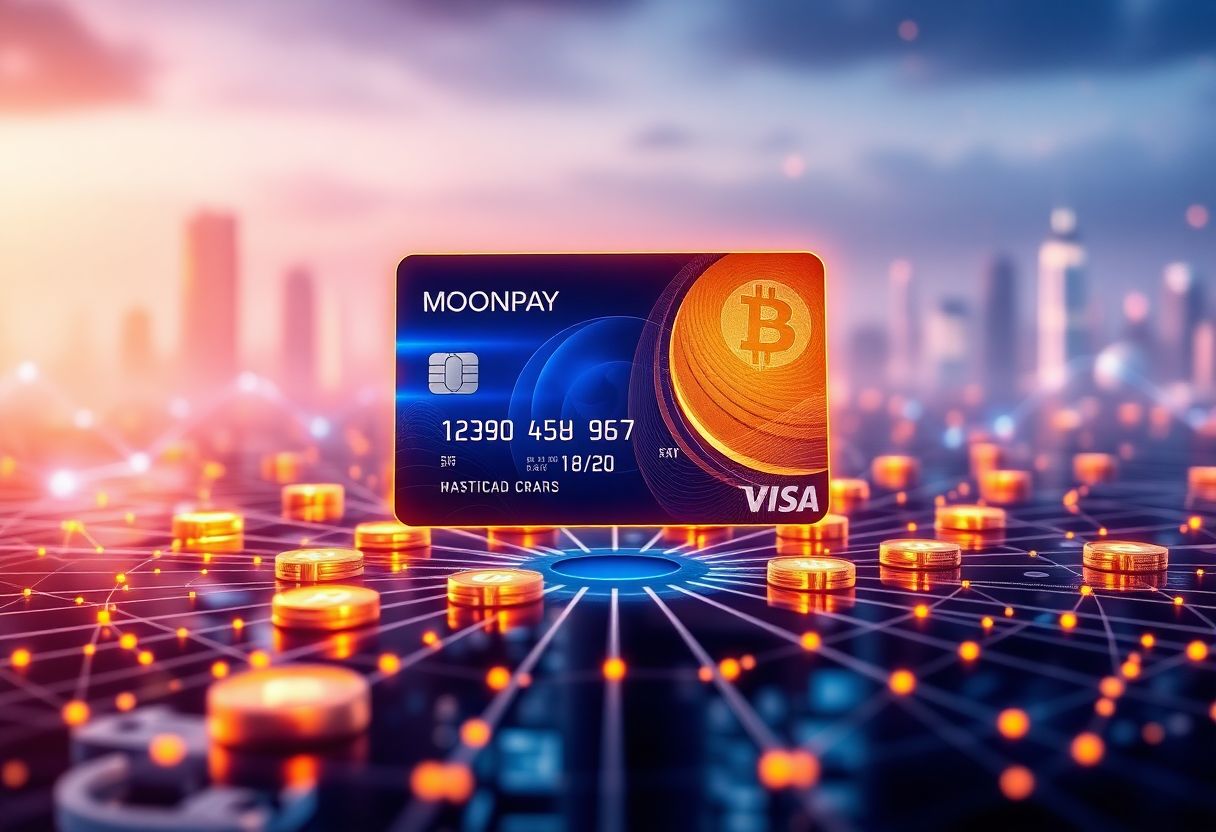
MoonPay Launches a Stablecoin Debit Card That Lets AI Agents Spend at Mastercard Merchants
MoonPay launched the MoonAgents Card on May 1, a virtual Mastercard debit card that allows both human users and authorized AI agents to spend stablecoins directly from on-chain wallets at any merchant that accepts Mastercard. The product was built under an expanded partnership between MoonPay, Exodus (EXOD), and Monavate.
It positions MoonPay as the first major cryptocurrency payments provider to extend card-based spending access to autonomous software agents operating on a user’s behalf.
How the Card Works
The MoonAgents Card converts stablecoins, cryptocurrencies designed to maintain a fixed value against a reference asset such as the U.S. dollar, into fiat at the point of sale, allowing merchants to receive standard payment without exposure to digital-asset volatility. Users authorize AI agents to spend from their on-chain wallets within preset limits.
The agent executes purchases autonomously, without requiring the user to approve each transaction manually.
A Stock Titan report published May 1 confirmed the card’s launch date and the three-party partnership structure. The product runs on Mastercard’s existing acceptance network, which covers more than 100 million merchant locations worldwide.
Exodus, the self-custodial cryptocurrency wallet provider listed on NASDAQ, contributes wallet infrastructure to the product. Monavate provides the card-issuing and compliance layer.
Also Read: Hyperliquid Holds the Top Spot in Perpetual Futures as the on-Chain Order Book Model Matures
Why AI Agents Need Payment Rails
AI agents are software programs that execute multi-step tasks on a user’s behalf, from booking travel to managing subscriptions, without requiring human approval at each step.
Until MoonAgents Card, an agent initiating a purchase in a cryptocurrency-native workflow had no direct path to spend at a real-world merchant without first converting funds through a centralized exchange or requiring manual user intervention.
The use case is narrow today but is growing fast. Several AI productivity platforms now allow agents to manage recurring payments, software licenses, and service subscriptions.
As agents take on more financial autonomy, the demand for programmable payment credentials tied to digital-asset wallets is rising. MoonPay’s card product meets that demand at the Mastercard network layer, bypassing the need for agents to interact with traditional bank accounts.
Corporate interest in agentic payments has accelerated through the first half of 2026.
Major technology firms have embedded autonomous agents into enterprise software at a rate that outpaces the regulatory frameworks governing their financial activities.
Also Read: PEPE Holds a $1.6 Billion Market Cap as Meme Coins Define Their Own Asset Class
Background
MoonPay has operated as a cryptocurrency payments infrastructure provider since 2019, offering fiat-to-crypto on-ramps for wallets, exchanges, and NFT platforms. The company processed over $5 billion in cumulative transaction volume through 2025.
Exodus, its partner in the MoonAgents Card, went public on NASDAQ and has built a reputation as a retail-friendly self-custodial wallet with support for more than 300 digital assets. Monavate is a European fintech licensed to issue Mastercard cards under UK and EU frameworks.
The MoonAgents launch follows a broader push by cryptocurrency infrastructure companies to connect on-chain wallets to everyday spending.
Competing providers have offered standard crypto debit cards since at least 2020, but none had previously extended spending authorization to AI agents operating autonomously.
Also Read: Chainlink Builds the Data Rails That Institutional Blockchain Finance Requires
What Comes Next
MoonPay has not disclosed a timeline for expanding the MoonAgents Card beyond its initial virtual-card format. A physical card issuance and expanded agent permissions, including the ability for agents to initiate recurring payments above a threshold set at launch, would be natural follow-on steps.
Regulatory scrutiny of autonomous agent payments is an open question. Financial regulators in both the U.S. and EU have not yet published guidance on who bears liability when an AI agent initiates an unauthorized or erroneous payment.
That gap could become the product’s most significant constraint over the next 12 months.
Read Next: OKX AI Agent Payments Protocol Feature