Terra Luna Classic Rallies 9% as Old-Guard Revival Narrative Returns
Terra Luna Classic gained 9% in 24 hours to May 8, pushing its market capitalization to $537 million as daily trading volume hit $131 million. The token ranks 105th by market cap.
The move puts LUNC back on the trending list for the first time in weeks and revives the community’s long-running argument that a sustained supply burn and protocol rebuild can restore meaningful value to one of cryptocurrency’s most catastrophic collapse stories.
What Is Driving the Terra Luna Classic Rally
The 9% move in LUNC arrives without a specific protocol announcement or major partnership trigger. Price action of this kind in old-guard altcoins typically reflects a mix of retail rotation, social-media amplification, and speculative positioning around a narrative that already has a built-in global community.
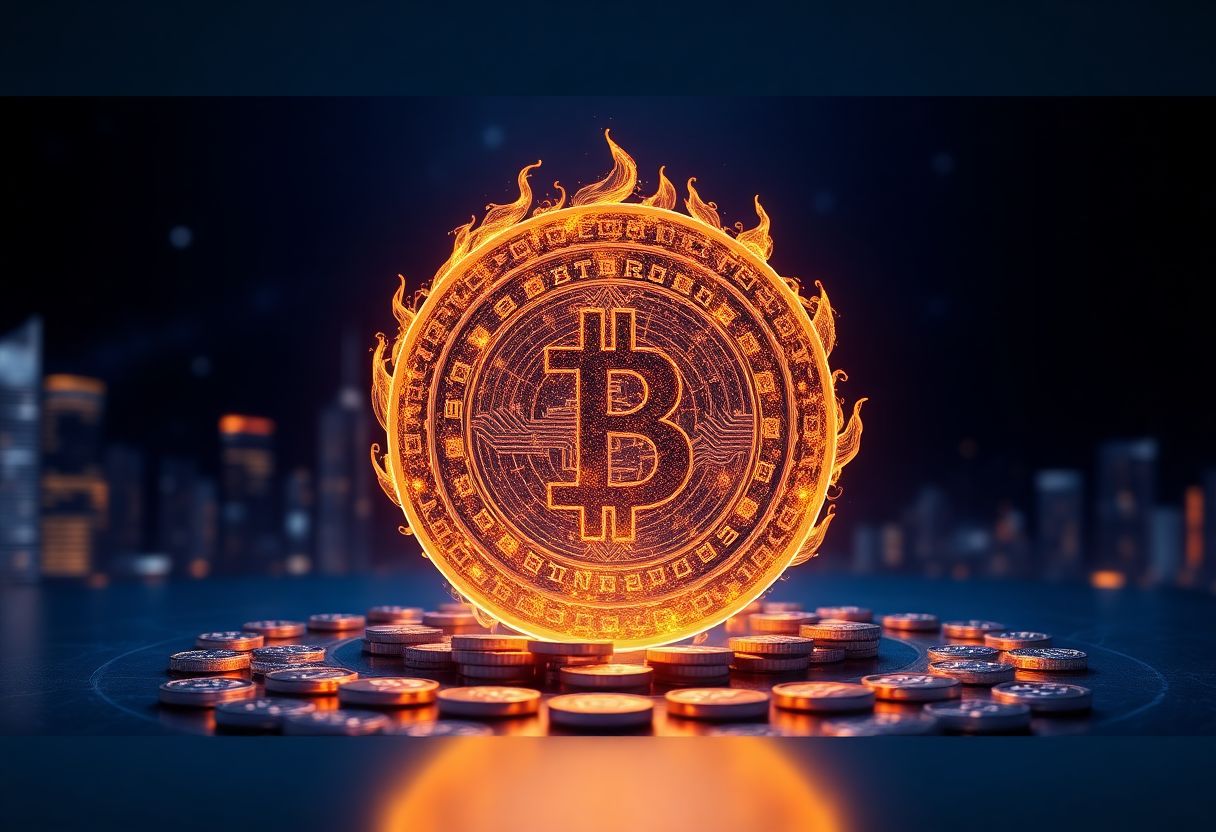
The Terra Luna Classic burn mechanism is central to that narrative.
Every transaction on the chain contributes a small percentage of tokens to an on-chain burn address, permanently removing supply from circulation. Community validators and governance participants have repeatedly pushed proposals to increase the burn rate.
Supporters argue that if the community maintains enough discipline around burn proposals and protocol upgrades, the deflationary pressure will eventually lift the price.
The $131 million in 24-hour volume is a meaningful signal for a token ranked 105th. For comparison, LUNC’s market cap sits at $537 million while its daily volume-to-market-cap ratio of roughly 24% is well above what you would typically see in stable large-cap tokens.
That ratio suggests traders are actively speculating rather than holding. High turnover relative to market cap is common in community-driven revival plays.
Also Read: LAB Token and the AI Data Economy Behind Its $465M Market Cap
Background: The Terra Collapse and What Came After
The Terra ecosystem collapsed in May 2022, erasing an estimated $40 billion in value across the Luna token and the algorithmic stablecoin TerraUSD (UST).
UST was a stablecoin, a cryptocurrency designed to maintain a fixed value against a reference asset, that relied on an algorithmic mint-and-burn mechanism with Luna rather than on dollar-backed reserves. When confidence broke, the mechanism entered a death spiral, and both assets fell to near zero within days.
Terraform Labs founder Do Kwon launched a new chain, Terra 2.0, and a new token called LUNA shortly after the collapse.
The original chain was rebranded Terra Luna Classic, and the original Luna token became LUNC. Kwon was later arrested in Montenegro in March 2023 on fraud and market manipulation charges and extradited to the United States in December 2024 to face federal proceedings.
The LUNC community, which operates independently of Terraform Labs, has continued developing and governing the original chain since the collapse.
They have passed multiple governance proposals to sustain the burn program and attract developers. The price has remained a fraction of pre-collapse levels, but periodic rallies, as in May 2026, keep community momentum alive.
Prior LUNC cycles in 2023 and 2024 showed a consistent pattern: a sharp 10-30% rally driven by trending social volume, a burst of governance activity, and then a fade back as retail interest moved to newer assets.
Whether May 2026 follows the same arc or sustains is the key question for LUNC holders.
Also Read: Nillion Holds 90% Weekly Gain as Privacy Compute Token Tests New Trading Range
The Bull and Bear Case for LUNC in 2026
The bull case rests on three pillars. First, the burn mechanism provides a credible deflationary narrative that distinguishes LUNC from purely speculative meme tokens.
Second, the global community of holders is unusually resilient for a token born from a catastrophic failure. Third, any broader altcoin season that lifts mid-cap tokens tends to disproportionately benefit revival narratives with existing name recognition.
The bear case is equally straightforward.
The ecosystem has no major decentralized applications with meaningful user traction. Developer activity on the chain is a fraction of comparable Layer-1 networks.
The Kwon legal proceedings keep a reputational cloud over the brand. And the token’s price is so far below its historical highs that even a 10x move from current levels would leave most 2021-era holders deeply underwater.
What to watch in the near term: governance proposals around burn rate changes, any developer announcements from community validators, and whether volume sustains above $100 million daily.
A drop back below $50 million in volume within 72 hours would suggest the rally is purely speculative rotation rather than a structural accumulation.
Read Next: Oil Rallies After U.S.-Iran Fire Exchange Threatens Strait of Hormuz Ceasefire